Iran’s supreme leader reportedly ordered the military to bring all U.S. and Israeli assets within reach and prepare for an “unrestricted” response if attacks resume.
Story Highlights
- Reported directive expands Iran’s target list to U.S. and Israeli assets worldwide
- Order frames moves as deterrence and links retaliation to renewed attacks
- Guidance includes more weapons output and stronger intelligence efforts
- U.S. planning for rapid strikes on Iranian sites raises escalation risk
What Iran’s Reported Order Says And Why It Matters
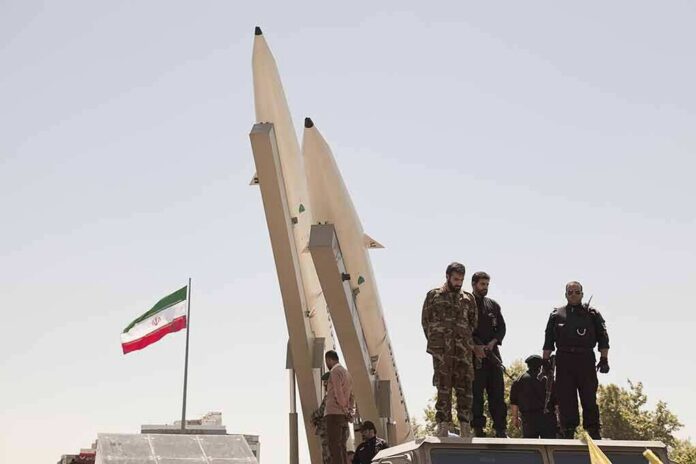
Reports on October 31 say Iran’s supreme leader told the armed forces to put “all U.S. and Israeli assets, tangible and intangible,” on their target list. The language also speaks of responses without geographic limits. The message presents this as deterrence and readiness for a powerful confrontation. The order ties action to a new attack by the United States or Israel. Public reports repeat similar phrasing and do not include an official document ID or full text release.
The statement also calls for broader military steps. Reports cite more ammunition and weapons production, stronger military intelligence, and building homegrown defense systems. These steps signal preparation across the force, not only missile units or cyber teams. They fit Iran’s pattern of using public threats to warn rivals and shape risk. But they do not, by themselves, prove Iran will act soon or that a strike is authorized today.
How U.S. And Israeli Planning Shapes The Stakes
U.S. officials have developed expanded target lists for strikes inside Iran, according to multiple reports. The planning includes energy infrastructure, military installations, and nuclear facilities. These plans could be executed within days of a presidential order, officials say. Analysts warn such strikes would likely trigger Iranian retaliation against American personnel and facilities across the region, and possibly beyond, raising the risk of a longer conflict.
U.S. intelligence assessments described in public reporting say Iran is unlikely to launch preemptive attacks on Americans or Israel right now. But they add that Iran would respond if hit again. That view tracks with Iran’s stated condition in the reported order. Together, the posture on both sides looks like a classic escalation ladder: each side claims defense, but each move raises the odds of the next step.
Limits Of The Evidence And What To Watch Next
The reporting on Iran’s directive relies on a shared October 31 statement and translations. Outlets cite similar wording, and none provide an authenticated, full Persian text or a document number. The language about “all” assets is broad and does not reveal a real target database or unit tasking. The trigger for retaliation is not defined. It is unclear whether cyber actions, covert activity, or only overt strikes would meet that threshold.
NEW: Senior officials from the Mecca Pact’s three signatories met with senior Iranian officials in Tehran on October 26 to discuss a new US-Iran deal in concert with ongoing Pakistani and Qatari efforts.
Read more ⬇️ https://t.co/7Ax5kkxQE1
— Institute for the Study of War (@TheStudyofWar) October 27, 2026
Americans across the spectrum see a pattern here. Leaders trade threats while costs fall on regular people. A wider war could hit energy prices, shipping, and the U.S. economy. Families already stretched by inflation and high bills would feel more pain. Citizens want clear goals, straight talk, and restraint guided by law. Watch for hard proof of mobilization inside Iran, concrete strike authorizations, and any public, verifiable red lines from all sides that lower the chance of a misstep.
Sources:
facebook.com, dailysabah.com, store.jpost.com, indiatoday.in, timesofindia.indiatimes.com, humenglish.com, f.aa.com.tr, thehill.com, cnn.com
© totalconservative.com 2026. All rights reserved.