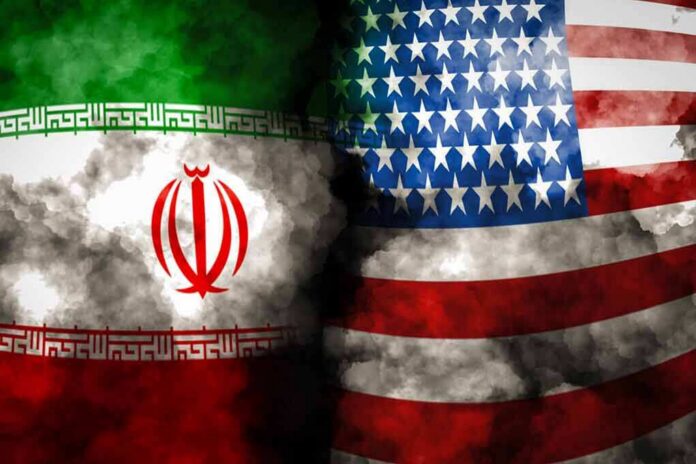
With a promise to launch the “toughest sanctions in history,” the U.S. Treasury just put the world’s banks, shippers, and brokers on notice that dealing with Iran could cost them access to the American financial system.
Story Highlights
- Treasury expanded sanctions on Iran’s shadow banking and oil networks, naming dozens of people, firms, and ships.
- Officials warned foreign institutions that helping Iran could trigger secondary sanctions and swift penalties.
- Iran’s government called the moves “unlawful” and “economic terrorism,” vowing to resist the pressure.
- Experts say secondary sanctions can bite hard but risk spillovers, over-compliance, and friction with partners.
Treasury’s New Target List and Why It Matters
The U.S. Department of the Treasury’s Office of Foreign Assets Control named new Iran-linked facilitators tied to oil sales, weapons programs, and shadow banking structures. Recent actions singled out more than 30 individuals, firms, and vessels that Treasury says move or hide billions for Tehran’s state networks. Officials tied these designations to a wider push to disrupt petroleum sales, foreign exchange operations, and procurement routes that support missiles and conventional weapons. Treasury framed the step as cutting off cash that fuels regional threats.
Federal financial crime officials also issued guidance to banks about Iran’s evasion patterns. The Financial Crimes Enforcement Network described multi-country “shadow banking” methods that use exchange houses, trading firms, and front companies to mask oil trades and launder proceeds. The advisory aims to help compliance teams spot suspicious flows and stop them before they reach the United States or allied systems. This pairing of designations and red flags shows a coordinated enforcement push that blends naming-and-shaming with practical risk indicators for the private sector.
The Secondary Sanctions Pressure on Global Finance
Treasury leaders signaled that “secondary” penalties are on the table for non‑U.S. firms that keep funding or servicing Iran. The warning makes a simple point: choose Iran or the U.S. market, but not both. Analysts note this tool extends U.S. reach into third countries by threatening access to dollar clearing and American banks. That pressure can be strong, yet it often triggers over‑compliance, where firms exit even legal or humanitarian trade to avoid any chance of being punished.
Past rounds show how this plays out on the ground. After earlier Iran measures, some banks pulled back from routine transactions due to fear of U.S. enforcement, crimping deals beyond the intended targets. Business leaders complain that the rules feel unclear, while regulators argue that ambiguity keeps bad actors guessing. This tension reflects a larger pattern: when Washington leans on access to its market, allies may bristle, but many companies still comply to protect their dollar pipelines.
Iran’s Response and the Human Cost Debate
Iran’s foreign ministry blasted the new steps as “unlawful,” “arbitrary,” and “economic terrorism,” claiming the measures violate international law and target ordinary citizens. Tehran’s envoys have long argued that these campaigns lack legal grounds and aim to break Iran’s will, not just its illicit networks. A United Nations special rapporteur previously warned that broad sanctions can crush a currency and drive people into poverty, making basic imports too costly for families. Those claims fuel global debate over where to draw ethical lines.
U.S. officials counter that the designations focus on revenue streams that fund weapons and proxy groups, not food or medicine. Still, the private sector often de‑risks beyond what rules require, which can slow lawful trade that keeps daily life going. This is where both right and left in America share concerns: elites write complex rules, institutions act to protect themselves, and regular people—at home and abroad—absorb the shock when supply chains snap or prices jump. That pattern deepens public distrust in global finance and government.
What Changes Now for Banks, Shippers, and Energy Markets
Compliance teams will re‑map counterparties, update screening lists, and review any exposure to Iranian oil, petrochemicals, and front companies named by Treasury. Shippers and insurers will scrutinize cargoes, registries, and ship behaviors tied to the so‑called “shadow fleet,” where flag changes, spoofed locations, and complex charters are red flags. Brokers will watch for payment chains that run through exchange houses or small trading firms in multiple jurisdictions, a hallmark of Iran-linked laundering schemes.
BREAKING: US Treasury Secretary Scott Bessent announces sweeping new sanctions dubbed 'Operation Economic Outcast' to sever 'every economic lifeline' sustaining Iran, warning any nation partnering with Tehran will share in its isolation. pic.twitter.com/cL9GFZ7Ih5
— HIT.com (@HIT) August 24, 2026
Energy markets may not move overnight if buyers already priced in risk, but each enforcement wave raises costs for Iran to move a barrel. If Treasury follows with more secondary actions, some traders and refiners could step back, at least for a while. That could squeeze Iranian revenues even if volumes slip only modestly. For Americans, the near‑term impact depends on global supply and spare capacity elsewhere. The larger question is stability: tighter pressure can also spark countermoves in the region.
Sources:
facebook.com, cnbc.com, thehill.com, thenationalnews.com, home.treasury.gov
© totalconservative.com 2026. All rights reserved.