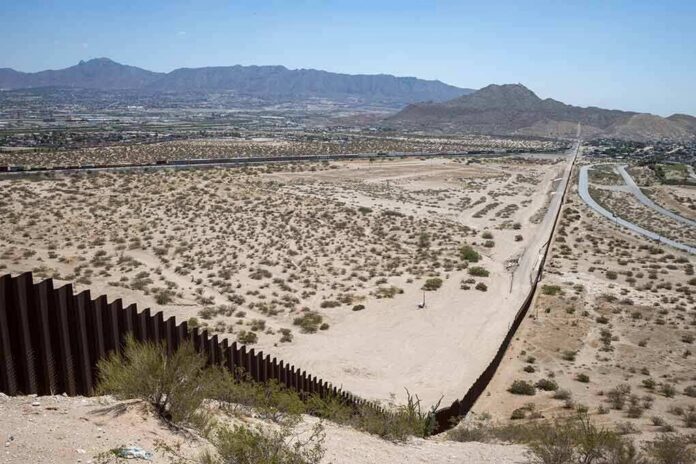
Border wall crews in drought-stricken New Mexico were told to stop drilling new wells after state officials said the wells lacked permits and ranchers warned the pumping could worsen an already fragile water supply.
Quick Take
- U.S. Customs and Border Protection told contractors to stop drilling new wells in New Mexico.
- State officials said at least six wells had been developed without required permits.
- CBP said water is needed for road work, concrete production, and dust control.
- The fight now centers on whether federal land status overrides state groundwater rules.
Why The Wells Became A Fight
The dispute began when New Mexico officials said border-wall contractors were drilling wells without state permits in a drought-hit stretch near the southern border. The state engineer’s office said it had identified at least six wells, while later reporting said staff counted eight and visited two wells that were pumping 200 gallons a minute. That pushed the issue from a quiet construction detail into a public clash over water, law, and control.
CBP said water is needed for road construction, concrete production, and dust suppression, and it said it was working with New Mexico on a groundwater plan. State officials rejected CBP’s legal argument that federal land status gives it immunity from New Mexico’s permit law. They said non-tribal wells need state permits even on federal land. That response put the permit question at the center of the story, not the border wall itself.
What State Officials And Ranchers Say
Ranchers along the border said the drilling threatens already stressed aquifers and nearby livestock. One rancher said the project could try to pull “300-plus gallons a minute,” which he said would “pump us dry”. Reporting from New Mexico also placed the wells on the federally owned Roosevelt Reservation strip, which means the land is federal but the water fight still runs through state law.
That mix helps explain why the issue has spread beyond a local water dispute. In the West, groundwater fights often turn on who controls the land, who controls the water, and which government gets the last word before damage is easy to see. Here, state officials say the answer is simple: permits are required. CBP says the federal government is allowed to proceed. The drought makes every gallon feel political.
What The Stop Order Means Now
The stop order shows federal officials felt enough pressure to pause new drilling, but it does not settle the legal fight. CBP has not publicly said whether already drilled wells can still be pumped, and the available reporting does not show a court ruling on the permit issue. For now, New Mexico officials appear to have forced a hold, not a final resolution. That leaves ranchers, contractors, and regulators waiting on the next move.
🔴 Trump border wall crews in New Mexico ordered to halt well drilling
Customs and Border Protection instructed contractors to stop drilling new wells after ranchers reported unmonitored groundwater extraction threatened livestock during severe drought.
Border wall construction… pic.twitter.com/fitt0b7Uj4— NewsTongue (@NewsTongueX) August 4, 2026
The deeper problem is trust. Supporters of the border wall see a federal project moving ahead despite local objections, while critics see another case of Washington brushing aside state rules when a big project is at stake. The water issue makes both sides sharper because it touches daily life, not theory. If the wells keep drawing attention, the next battle may be less about the wall and more about who gets to govern scarce resources in the West.
Sources:
washingtontimes.com, iowapublicradio.org, wbur.org, npr.org
© totalconservative.com 2026. All rights reserved.