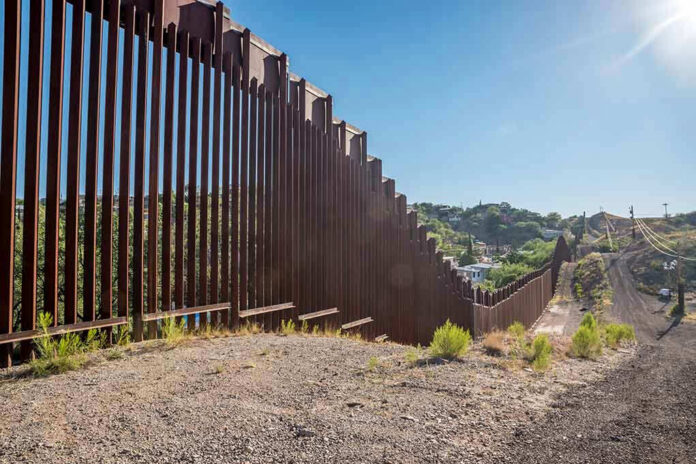
Federal officials are telling West Texas ranch families to accept a border wall on their land or risk losing their property in court.
Story Snapshot
- Texas border landowners are getting federal “right‑of‑entry” offers with cash bonuses and quiet threats of condemnation if they do not sign.[2][6]
- Decades of border-wall law give Washington broad power to seize land for “public use,” but past abuses make rural families wary.[3][4][9]
- Texas state law now blocks eminent domain for the state wall, yet federal agencies can still condemn private land for the national barrier.[4][5][14]
- Conservatives face a hard tradeoff: secure the border with real barriers while demanding due process, fair pay, and respect for private property.[3][4][8]
Why West Texas Landowners Feel Cornered
In remote parts of West Texas, ranchers are receiving new border wall packets that read like an ultimatum. Customs and Border Protection is offering up to $5,000 if owners quickly sign “right‑of‑entry” construction forms, which let federal contractors onto their land for surveys and early work.[2][6] The same letters warn that if owners delay or refuse, the government may sue to condemn the land through eminent domain. Many families simply do not have the cash or lawyers to fight a federal case.[2][3]
Property rights groups and border attorneys say the choices are stacked in Washington’s favor. One Texas firm explains that landowners now face three basic options: sign a right‑of‑entry agreement, negotiate a sale or easement later, or wait for a condemnation lawsuit.[3][6] That means the government can either come in with a “bonus” and a pen or come in with the Department of Justice and a judge. For families whose land has been in the family for generations, none of these feel like real choices.
The Legal Muscle Behind Federal Border Seizures
The federal power here traces back to laws passed long before today’s fight. The Illegal Immigration Reform and Immigrant Responsibility Act and later the Secure Fence Act ordered hundreds of miles of border barriers and gave the Department of Homeland Security the power to “contract for or buy any interest in land” needed to control the border, including by condemnation.[3][15] Eminent domain allows the government to take land for public use, but the Fifth Amendment says it must pay “just compensation.”[4][12]
On paper, that sounds fair. In practice, history shows many border families get steamrolled. A fact sheet on southern border seizures notes that after the Secure Fence Act, Washington filed more than 360 eminent domain lawsuits in just seven months, including 334 in South Texas.[4] A decade later, 60 to 70 of those cases were still unresolved because of fights over compensation.[4] Investigations found that officials sometimes skipped full appraisals, paid people who did not even own the land, and used waivers to weaken key protections.[4][9]
Texas Drew a Line — But Washington Did Not
Texas lawmakers, hearing from their own ranchers, decided the state should not have that kind of seizure power for its separate wall program. In 2021, the Legislature banned the use of eminent domain for the state‑run border wall, forcing officials to rely on voluntary easements and one‑time payments instead of taking land.[4][5] Reports show that at least a third of landowners approached by the state have refused, leaving big gaps and pushing construction into more remote areas.[4][5]
That state limit does not bind the federal government. Under long‑standing federal eminent domain law, Washington can still condemn private land in Texas when it claims a legitimate public use, like border security infrastructure.[4][14] One border‑law analysis warns landowners that, absent a rare constitutional win, they are unlikely to stop the taking itself and must focus on getting fair value for what is taken.[14] For many conservatives, that is a bitter pill: the same Constitution they revere is being used to justify taking family land while promising only a fight over price.
New Trump‑Era Tactics Raise Due‑Process Fears
With billions already allocated for wall work, federal agencies now say they are “legally and contractually obligated” to move forward along the Rio Grande.[3][8] Recent reporting describes a new tactic: push landowners to sign right‑of‑entry deals that allow construction to begin before a full purchase or condemnation is finished.[6] Offers of a few thousand dollars can sound tempting in a tough economy, but signing may weaken an owner’s leverage later when the government sets the final price.
In far West Texas, the threat of land seizures for a border wall has families on edge.
In the Big Bend region, where some families have lived for generations, government letters seeking access to their land is sparking fear and resistance. https://t.co/iM6GEXs14i
— Texas Tribune (@TexasTribune) June 16, 2026
Conservative readers will see the danger. A border wall is a crucial tool against illegal immigration, cartels, and human smugglers. But rushed paperwork, sloppy surveys, and pressure tactics undermine trust in the very institutions tasked with defending the border.[9][10] In Big Bend and elsewhere, some landowners say survey packets even used wrong boundary lines or ownership names, raising fears of the same kind of errors journalists exposed in earlier land grabs.[9][10] That history explains why many ranch families now hesitate to sign anything without independent legal help.
How Patriots Can Back the Wall and Guard Property Rights
For conservatives, this is not a choice between border security and private property. The country needs both. The same federal laws that empower border construction also allow landowners to demand full appraisals, document all harms, and challenge lowball offers in court.[4][8][14] Attorneys who work these cases urge owners to get their own appraisals, keep records of lost access and business impacts, and avoid rushing into quick settlements that ignore long‑term damage.[8][14]
At a political level, Trump supporters can press Congress and the administration to tighten guardrails on eminent domain use at the border. That means more transparency about waivers, higher standards for surveys and title work, and real penalties when agencies cut corners or misidentify owners.[4][9][15] A strong wall built with respect for the Constitution and for families who live on the line will be harder for the left to attack and easier for future generations to defend.
Sources:
[2] Web – DHS waives certain legal regulations to expedite border wall …
[3] Web – Lawsuit Challenges Big Bend Border Wall Construction
[4] Web – [PDF] obstructing human rights: the texas-mexico border wall
[5] Web – [PDF] Eminent Domain Along the Southern Border: Government Seizures …
[6] Web – Official Border Wall plans have been released for the Big Bend. If …
[8] Web – In far West Texas, the threat of land seizures for a border wall has …
[9] Web – As landowners resist, Texas’ border wall is fragmented and built in …
[10] Web – Landowner resistance forces Texas to build wall in remote areas
[12] Web – Zapata County landowners say border wall contractors … – TPR
[14] Web – Texas Landowners Dig In to Fight Trump’s Border Wall – VOA
[15] Web – Texas landowners in the Big Bend region are fighting federal efforts …
© totalconservative.com 2026. All rights reserved.