
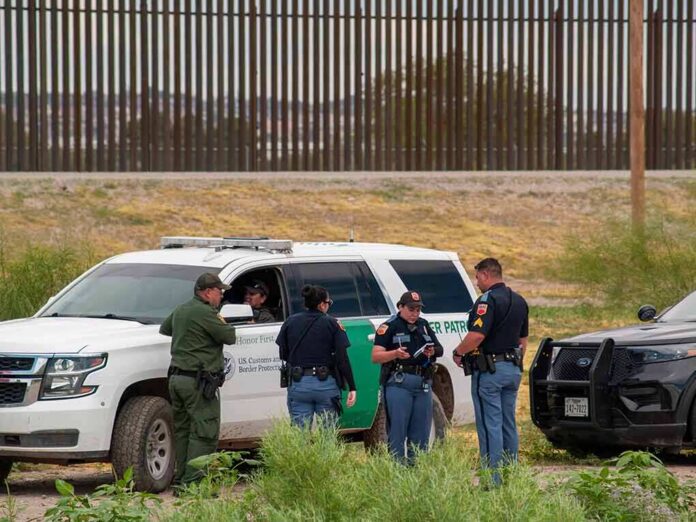
Cartel and smuggling crews are disguising themselves as law enforcement and the military to move people and contraband across the border, and officials keep finding the gear to prove it.
Story Snapshot
- Mexican raids have found workshops making fake military uniforms near the U.S. border.
- U.S. agents have intercepted cloned Border Patrol vehicles used to hide smuggling runs.
- Mexico has flagged armed impostors posing as soldiers during border standoffs.
- Recent arrests show smugglers wearing Border Patrol-style outfits to move migrants.
What officials say they are finding on both sides of the border
Mexican authorities said they dismantled a factory in Piedras Negras that produced copies of Mexican military uniforms. The Mexican Navy reported hundreds of camouflage items, including vests, pants, and shirts, tied to cartel use. The Navy said the gear aimed to “discredit” Marines by copying their look. U.S. officials have also described a rise in fake law enforcement vehicles and outfits. These finds show a tactic meant to fool checkpoints and buy time during quick moves.
United States Customs and Border Protection (CBP) reported stopping a human smuggling attempt using a vehicle cloned to look like an official Border Patrol unit. Agents said the four-door vehicle carried the green diagonal stripe and other markings to pass as real. The stop led to arrests and the seizure of the look‑alike truck, which was used to hide migrants in plain sight during travel near the border.
How disguises change border risks for communities and officers
Mexico previously told the United States that armed men in uniforms seen near a border standoff were not soldiers but impostors. That meant criminals were able to roam in military-style convoys and aid traffickers while dressed as authorities. When criminals look like officers, the public can be confused at roadblocks. Real officers also face higher danger because hesitation can be fatal if a team in uniform turns out to be a cartel unit.
In Arizona, recent arrests showed three suspects posing as Border Patrol agents while moving 24 migrants. Officials said two suspects were U.S. citizens and one was a Mexican national, and all face federal charges. The case detailed fake gear and staged authority to calm migrants and slip past attention. The arrests show how quickly this tactic can scale from one vehicle to many people at once when criminals copy the look of the state.
Why both parties should care about the “disguise as enforcement” trend
Border communities want safe roads, honest policing, and fair rules. Disguises by criminals strike at each goal. When cartels or smugglers dress like police or soldiers, they try to blur who is in charge. That weakens trust in real officers and slows response times. It also hurts migrants, who may board a cloned truck because uniforms look official. Each fake convoy or uniform adds chaos and makes every traffic stop a higher‑risk call for local and federal agents.
This tactic also reveals a deeper systems gap. Real gear, markings, and vehicles follow standards; fakes often get close enough to pass a brief glance. Officials have urged agents and the public to look for small errors in paint, plates, seals, and behavior. But that is a stopgap. Smarter tracking of uniforms, parts, and decals can help. So can quicker cross-border data sharing on seizures. These steps target the supply chain that feeds the fakes, not just the last-mile chase.
Sources:
youtube.com, abcnews.com, x.com, foxnews.com
© totalconservative.com 2026. All rights reserved.