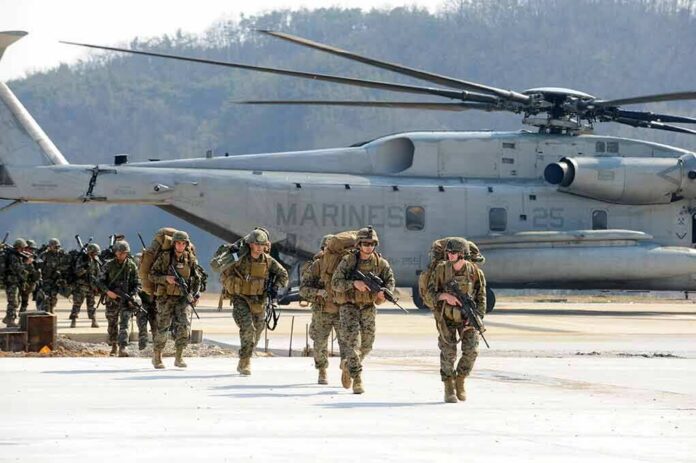
The Army and Navy are dangling bonuses as high as $200,000 to keep experienced officers and aviators from walking out the door.
Story Snapshot
- The Army is offering retention bonuses up to $200,000 and the Navy up to $150,000 for experienced aviators, according to Military Times reporting.
- Stacking Navy officer bonus programs with sign-on and enlistment incentives can push total payouts toward $210,000 for some career paths.
- The Pentagon has spent more than $6 billion over three years on recruiting and retention across the Army, Navy, Air Force, and Marines.
- The Army is now tying some retention bonuses to fitness scores and job performance, adding new conditions to the payouts.
Record-Size Bonuses Target Critical Roles
Both the Army and the Navy are offering big cash incentives to retain experienced aviators. Military Times reports contracts require two to three years of extra service, with pay ranging from $37,000 to $150,000 depending on rank and job. Separately, the Army has advertised retention bonuses up to $200,000 for some of its hardest-to-replace pilots and officers.
The Navy runs several officer retention programs at once. Its official personnel office lists the Department Head Retention Bonus, the Lieutenant Commander Retention Bonus, and the Senior Officer Retention Bonus. The Navy caps any single retention bonus contract at $150,000 for a six-year commitment, though officers who qualify for multiple programs can collect more over time.
How the Numbers Add Up
Separate bonus tracks can combine to push total payouts near $210,000 for some sailors. The Navy is also offering up to $140,000 for new active-duty recruits who ship to boot camp before October 2026, on top of enlistment bonuses tied to specific jobs. The Army offers up to $50,000 in combined bonuses for certain enlisted positions, layered on top of its officer retention pay.
These programs are not one single new policy. They are a patchwork of separate incentives, each targeting a different rank, job, or years of service. News coverage sometimes compresses these programs into one large headline number, which can make the total look bigger or more unified than it actually is on paper.
A Growing Pattern of Bonus Spending
Bonus spending has been climbing for years, not shrinking. Between 2000 and 2008, Department of Defense spending on reenlistment bonuses grew from $891 million to $1.4 billion, and the share of Army recruits getting bonuses rose from about 40% to 70%. That trend has continued. The military spent more than $6 billion over the past three years fighting enlistment shortfalls across all four branches.
The Navy Reserve joined the push too, announcing bonuses up to $20,000 for enlisted sailors, officers, and civilians starting June 2026. Officials say the goal is filling gaps in specific job fields where the Reserve has struggled to keep trained people in uniform.
New Strings Attached to the Money
The Army is changing how it hands out some of these bonuses. It will now tie certain retention payments to physical fitness test scores and job performance instead of handing out flat amounts to everyone. For now, every soldier is set at the top payment tier, meaning most troops are still getting the maximum bonus while the new performance rules phase in.
For taxpayers and troops alike, the bigger picture is a military that keeps raising the price of retention because it cannot easily solve the underlying problem: fewer young Americans are choosing, or qualifying, to serve. Six-figure bonuses may buy short-term fixes, but they do not address why experienced officers and aviators are tempted to leave in the first place.
🚨U.S. Navy offering $150,000 retention bonuses. Army offering up to $200,000.
They’re throwing massive cash at experienced pilots and flight officers just to stop them from leaving.
Empire is burning through its aircrews and now has to bribe them to stay.
The human cost of… pic.twitter.com/p9rDH2N68f
— HUSSEIN (@PulseOrbit) August 1, 2026
Congress and defense officials will likely keep watching whether these bonus programs actually slow the exodus of trained personnel, or simply raise costs without solving the retention problem long term.
Sources:
military.com, yahoo.com, mynavyhr.navy.mil, rand.org, navy.com, reddit.com
© totalconservative.com 2026. All rights reserved.