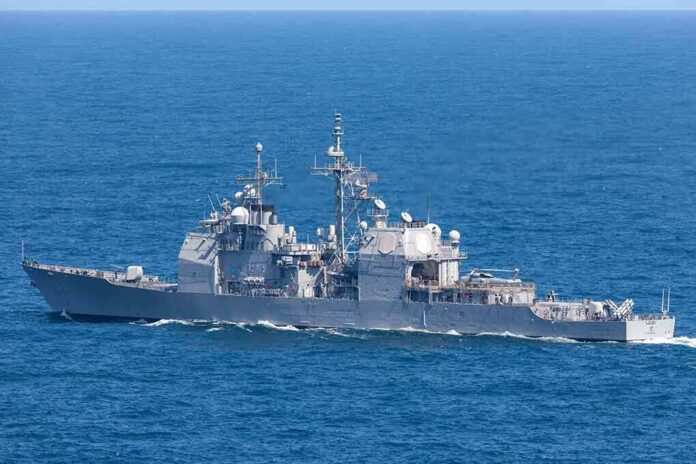
The United States has launched another deep round of overnight strikes inside Iran, aiming to cripple Tehran’s ability to threaten shipping and American troops around the Strait of Hormuz.
Story Snapshot
- U.S. Central Command says the latest strikes hit about 90 Iranian military targets tied to shipping attacks.
- American forces have now carried out repeated nights of strikes, expanding to larger target sets across Iran.
- The campaign is framed as protecting commercial vessels, civilian mariners, and U.S. personnel from Iranian aggression.
- Iran claims retaliation and warns neighbors, raising fears of a wider Gulf war and energy shock.
Trump Orders New Strikes To Protect Shipping And U.S. Forces
U.S. Central Command reported that American forces completed another round of strikes against Iran, focusing on military targets that support attacks on commercial shipping in the Strait of Hormuz. The statement said U.S. forces hit around 90 sites, including air defense systems, coastal surveillance assets, missile and drone storage locations, naval capabilities, and military logistics hubs along Iran’s coastline. Officials described the operation as part of a continuing effort to stop Iran from menacing merchant ships and “innocent civilian mariners” in the narrow waterway.
Central Command stressed that the targets were military in nature and tied directly to Iran’s ability to strike ships, not civilian neighborhoods or unrelated infrastructure. The command framed the action as necessary after Iranian forces attacked commercial vessels passing through the strait, violating a fragile ceasefire that had been negotiated only weeks earlier. For a Trump‑supporting audience, this marks a clear break from years of appeasement and sends the message that American lives and world energy flows will not be left at the mercy of hostile regimes.
Sustained Campaign Hits Deeper Inside Iran
The latest strikes did not come out of nowhere; they followed earlier nights in which U.S. forces hit about 80 Iranian military targets, including more than 60 Islamic Revolutionary Guard small boats used to harass shipping. Reports from regional and international outlets describe successive rounds of attacks, with one phase striking roughly 140 military sites such as missile and drone facilities, naval assets, ammunition storage, and communications nodes. This pattern points to a sustained campaign to tear apart Iran’s strike network piece by piece, rather than a single symbolic show of force.
News coverage notes that the United States began these renewed strikes after Iranian attacks on at least three commercial vessels in the Strait of Hormuz, including the Cyprus‑flagged cargo ship GFS Galaxy, which was left burning and disabled. Central Command said the goal was to “continue degrading” Iran’s ability to hit civilian mariners and commercial ships that should be able to move freely through the strait. In simple terms, Washington is trying to make it too costly for Tehran to keep playing games with other nations’ oil and trade routes, which directly affect energy prices and inflation back home.
Strait Of Hormuz: A Chokepoint With Huge Economic Stakes
Analysts remind us that the Strait of Hormuz is one of the world’s most important energy corridors, carrying a large share of global oil and gas exports. Even limited attacks or threats there can send shock waves through global markets, driving up fuel prices, hurting family budgets, and giving rogue states leverage they should never have. That is why both the United States and Iran claim they are acting in “defense,” even as they trade strikes; each side wants to look like the responsible actor while trying to shape the facts on the water.
More US attacks on Iran overnight – as we learned this weekend that two U-S servicemembers were killed and a third is missing after an Iranian missile and drone attack in Jordan.
NewsNation's Tom Dempsey is following developments.: “Overnight, the US military conducting its 8th… pic.twitter.com/2Ersd3isa1— Worldwide News Network (@WorldwideNNX) July 19, 2026
Reports show that Iran has answered U.S. strikes with its own attacks on American facilities in Bahrain, radar systems in Oman, and bases in the wider Gulf region. Iranian officials boast about targeting dozens of sites, while shipping traffic through the strait has dropped noticeably as companies try to avoid the danger zone. For everyday Americans, that means the fight over this narrow stretch of water is not a distant drama; it is tied to what they pay to fill their trucks and heat their homes, and whether the U.S. government stands firm against regimes that weaponize energy.
Unanswered Questions On Law And Transparency
While the basic facts of the strikes are clear, some important questions remain open. Public reporting has not yet produced a detailed legal memo showing how the administration ties these operations to U.S. law or Article 51 of the United Nations Charter. International law experts are already arguing over whether earlier U.S.–Israeli actions against Iran were lawful self‑defense or illegal aggression, and those debates are likely to grow louder as the campaign continues.
There is also limited independent evidence about each individual target. Central Command insists it is hitting military sites like missile batteries, boats, and surveillance systems, and not civilian buildings. But outside observers still lack broad access to satellite images, damage reports, or on‑the‑ground inspections that would prove every strike was carefully chosen. For conservatives who value strong defense and limited government, this underscores a key point: America must smash terrorist tools and protect trade, yet it also owes the public clear facts about why and how force is used.
Sources:
facebook.com, livemint.com, gulfnews.com, defence-industry.eu, en.wikipedia.org, centcom.mil, foxnews.com, cnn.com, youtube.com, tandfonline.com, npr.org, diplomacyandlaw.com
© totalconservative.com 2026. All rights reserved.