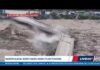
Five lives ended on a mountain road where a Dutch tour bus flipped in a roadworks zone, and 40 others were hurt.
Story Snapshot
- Police reported five dead and 40 injured after a Dutch tour coach overturned near Susch and Zernez in eastern Switzerland.
- All 45 people on board were adults; three were seriously hurt, seven moderately, and 30 slightly.
- Emergency crews moved survivors to hospitals using 13 ambulances and seven rescue helicopters.
- Authorities said the coach veered off the road in a construction area; the cause remains under investigation.
Fatal overturn on a narrow Alpine link
Police said the tour bus carrying Dutch travelers overturned between Susch and Zernez in the Engadine valley in the canton of Graubünden. The crash happened in a roadworks area on a mountain route that handles local traffic and tourist coaches. The bus had 45 adults on board. Five died at the scene or soon after, and 40 sustained injuries of varying severity, according to police summaries carried by major outlets. Roads in the area closed as first responders worked through the night.
Swiss authorities described the initial sequence in simple terms. The coach veered off the roadway within the work zone and overturned on its side. The reported injury breakdown shows three serious, seven moderate, and 30 slight cases. That pattern aligns with a rollover inside a channeled corridor, where seat belts, stowage, and interior impacts shape injuries more than a high-speed plunge. Officials have not assigned a cause. That step will follow a standard reconstruction and records review.
Coordinated rescue under tight timelines
Rescue teams lifted the coach and moved victims methodically. Dispatchers sent seven rescue helicopters and 13 ambulances, a scale that fits both the terrain and the count of injured adults. Crews triaged on site, stabilized patients, and split transports across regional hospitals to avoid overload. That kind of logistics work saves lives in mountain incidents. Helicopters shrink the distance penalty that Alpine roads impose. Controlled lifts reduce crush risks for anyone trapped inside a rolled coach.
Police and medical teams face a hard balance in these scenes. They must secure the site, keep the route clear for air and ground assets, and preserve evidence for investigators. The early casualty count held steady across outlets, which suggests clear scene control and hospital coordination. That reduces the chance of major later revisions. Swiss responders train for this blend of trauma care, air operations, and evidence handling because one mistake can ripple through care and the later probe.
What investigators will test next
Investigators will start with basics: driver statements, tachograph data, speed estimates, braking marks, steering inputs, and tire and brake condition. They will document the work zone layout, lane shifts, barriers, signage, and surface friction. They will test whether road geometry, a sudden lane jog, or loose aggregate nudged the coach off line. They will weigh mechanical issues against human factors such as distraction or fatigue. A thorough report ties these threads together rather than chasing a single easy answer.
Officials confirmed the coach and passengers came from the Netherlands, and trade groups linked the tour to a known Dutch operator. Nationality often leads headlines, but the real public-safety questions live on the road: did the work zone design meet standards, were warning cues clear, and did the bus manage speed for conditions? Those answers do more to prevent the next crash than brand labels ever will. Swiss leaders pledged a full and careful inquiry to reach those answers.
Why Alpine rollovers hit so hard
Mountain routes mix tight lanes, complex curves, and variable surfaces. Construction zones squeeze margins further. A long-wheelbase coach reacts poorly to sudden lateral shifts at speed. A few inches of drift in a narrowed lane can start a slide or a barrier strike. If a coach trips and rolls, interior impacts multiply injuries fast, even with belts. Prior Swiss tragedies showed that the question is not only speed, but also work zone setup, barrier choice, and the driver’s time to react.
Tour Bus Overturns in Swiss Alps, Killing Five
• Five people died and around 40 were injured in the crash.
• The bus carried Dutch tourists and overturned after hitting a barrier.
• Incident occurred in Graubuenden canton, eastern Switzerland.🌍 Why it matters:
• Swiss… pic.twitter.com/RozftFnOKc— The Unbiased Update (@unbiased_update) September 11, 2026
Common-sense fixes help, and they do not require a new bureaucracy. Clearer taper markings, conservative work-zone speeds, rumble cues before lane jogs, and strict coach belt use save lives. Coach operators can brief passengers at departure and enforce belts. Road managers can audit mountain work zones for lane width, sightlines, and barrier type. These steps reflect core conservative values: do the basics well, set rules you will actually enforce, and hold every player accountable when they fall short.
Sources:
youtube.com, upi.com, ksl.com, nypost.com
© totalconservative.com 2026. All rights reserved.