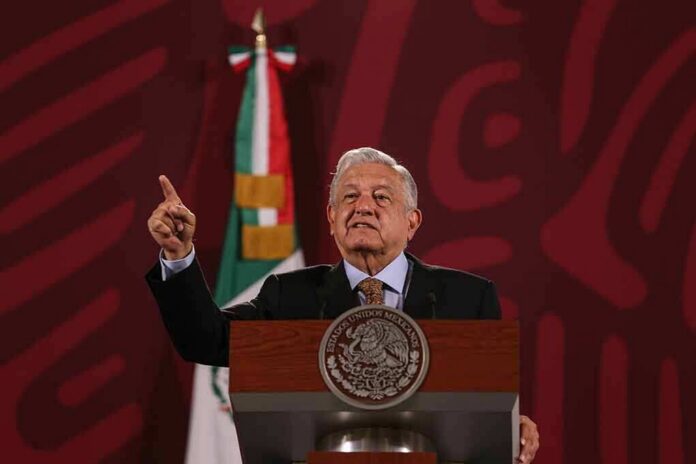
A sitting Mexican governor wanted in the United States on cartel charges just walked back into office, daring two governments to act.
Story Snapshot
- U.S. prosecutors charged Sinaloa Governor Rubén Rocha Moya with drug and weapons conspiracies.
- Rocha took leave for over three months, then returned to office in Sinaloa on Friday.
- Rocha denies the allegations and says they are politically motivated.
- The rare U.S. indictment of a sitting Mexican governor raises cross-border tensions.
What U.S. prosecutors say is at stake
United States prosecutors in New York unsealed an indictment charging Sinaloa Governor Rubén Rocha Moya with a narcotics importation conspiracy and firearms offenses. The charges claim he helped the Sinaloa Cartel move large amounts of drugs into the United States and aided access to machine guns and destructive devices. Associated Press reporting says nine other current and former Mexican officials face similar counts in the same case, which aims to show political protection for traffickers, not only street-level crime.
United States media coverage described the case as unusual because it targets a sitting state leader. The Los Angeles Times reported this appears to be the first time the United States indicted a sitting Mexican governor, which adds legal and diplomatic weight to the move. That rarity matters. It signals a shift toward treating alleged political protection as part of the trafficking machine, not a side issue, and it pressures Mexico to respond.
How Mexico and Rocha responded
Rocha stepped aside in early May after the charges became public, then returned to his post after more than three months away. Reuters reported his return to office in Sinaloa on Friday, noting the step could increase strains between Mexico and the United States as the case advances. Rocha has repeatedly denied wrongdoing and called the accusations false and politically driven, saying he would prove them baseless in time. Mexican federal authorities began their own review while resisting swift extradition without stronger proof.
Rocha’s comeback highlights a legal gap between the two countries. United States prosecutors say the grand jury found cause to charge him. Mexico says it needs overwhelming evidence to detain or extradite an elected leader. That standoff leaves a powerful official under indictment across the border still running a state. For families hurt by fentanyl and meth, and for citizens in Sinaloa living with cartel power, it looks like government systems are slow to protect them.
Why this rare case matters for both countries
The indictment fits a wider push to hit cartels and their political shields together. Newsrooms and researchers note United States cases now track corruption networks that enable trafficking, not just drug labs and couriers. When a sitting governor is charged, the message to other officials is sharp. But it also triggers nationalist pushback in Mexico, where leaders warn against outside pressure even as violence and trafficking grind on. That fuels a cycle where each side blames the other while the public sees little change.
The governor of Mexico’s violence-plagued Sinaloa state, Ruben Rocha, who is wanted by the US on drug trafficking charges, said Friday he had returned to office after a nearly four-month absence.https://t.co/Njrq0JWoUz
— Katie Liane (@TheKaterPotater) August 21, 2026
For Americans, the case raises core questions about border security, rule of law, and whether international partners will deliver. For Mexicans, it raises questions about sovereignty, due process, and whether elites can face justice at home. Both publics share a worry that well-connected people play by different rules. When a governor under United States indictment resumes office, it feeds that fear. Strong evidence, transparent trials, and steady cooperation are the only way to rebuild trust.
Sources:
insiderpaper.com, aljazeera.com, usnews.com, en.wikipedia.org, wsj.com, nytimes.com, theguardian.com
© totalconservative.com 2026. All rights reserved.