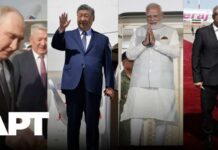
President Trump said Kim Jong Un “has always treated me with great respect” as he ordered a sharp cut to U.S.–South Korea military drills.
Story Highlights
- Trump directed the Pentagon to substantially scale back joint drills with South Korea, citing his relationship with Kim Jong Un.
- Trump argued fewer exercises lower tensions and open the door for talks with North Korea.
- Analysts say joint drills are central to deterring North Korean aggression and keeping forces ready.
- The move follows past pauses and reductions to exercises during diplomatic outreach to Pyongyang.
Trump’s Directive And His Rationale
President Trump announced he told the Pentagon to substantially reduce combined military exercises with South Korea. Trump tied the decision to cost, alliance fairness, and his direct line with North Korea’s ruler. He said Kim “has always treated me with great respect” and that cutting back drills makes the region safer and more open to talks. Trump has used this approach before, linking personal diplomacy to scaled-down training cycles on the peninsula.
Trump also framed the exercises as expensive and provocative from Pyongyang’s view. He argued that lowering the temperature can create room for progress without giving up American strength. Supporters see a practical trade: keep pressure through capability, but remove set-piece moves that North Korea blasts as hostile. Trump’s defenders say this is common sense statecraft. They argue measured restraint can test whether Kim will meet, talk, and pause his own escalations.
How Joint Drills Fit Deterrence And Readiness
Military experts and past commanders describe these exercises as the backbone of alliance readiness. Training together builds trust, speed, and communication under stress. It also shows North Korea that the allies stand shoulder to shoulder. That message helps deter miscalculation. Research groups and policy institutes point to decades of drills, like Ulchi Freedom Guardian and others, that honed combined skills and signaled resolve to Pyongyang and the region.
Advocates for steady drills warn that large reductions can, over time, erode habits that only repetition locks in. They also worry that pauses may be read by North Korea as weakness, not goodwill. Analysts note that North Korea often blasts allied exercises as a threat, while the allies see them as defensive and routine. This tension has long shaped the cycle of exercises, responses, and talks in Korea strategy. Even when cutbacks are tactical, the alliance must guard against slipping readiness.
Historical Pattern: Dial Down To Open Talks
Trump’s move reflects a known pattern in Korea diplomacy. Leaders sometimes scale back drills to spur contact with Pyongyang. Past episodes saw Washington cancel or trim events, while defense officials restated that treaty commitments remained “ironclad.” Those steps aimed to test whether North Korea would come to the table and reduce risk in the short term without changing the core posture of U.S. power in the region.
The record shows mixed results. Some pauses helped calm tempers and create brief diplomatic windows. Other times, North Korea kept building out its arsenal or staged new tests after lulls. That is why many strategists favor what they call “deterrence by denial” and constant combined training. Still, they accept leaders may adjust the tempo to pursue a diplomatic opening. The key is to keep capability sharp while probing for real steps from Pyongyang.
What Changes Now On The Peninsula
The Pentagon will now pare back the size and frequency of certain joint activities with South Korea. Day-to-day coordination, intelligence sharing, and smaller unit training can continue under a lighter footprint. The allies retain the option to scale up again if North Korea ramps up threats. Trump’s team is betting that Kim will respond to the lowered profile with talks or restraint, which Trump says his relationship can help unlock.
Trump pushes back on criticism over North Korea saying Kim Jong Un has always treated him with great respect and insisting his approach is making the world safer#Europost pic.twitter.com/vEqVccxP5Z
— EuroPost Agency (@EuroPostAgency) August 17, 2026
For conservatives, the measure tests a core belief: peace through strength. The administration signals strength stays, even as the public drills shrink. Supporters expect measurable results, such as fewer missile shots or direct talks. Critics of exercise cuts will watch readiness markers and alliance trust. Both sides agree the United States must keep a decisive edge, protect our troops, and uphold commitments, while avoiding blank checks to any regime that menaces our allies.
Sources:
theguardian.com, bbc.com, bloomberg.com, nytimes.com, 38north.org, quincyinst.org
© totalconservative.com 2026. All rights reserved.